

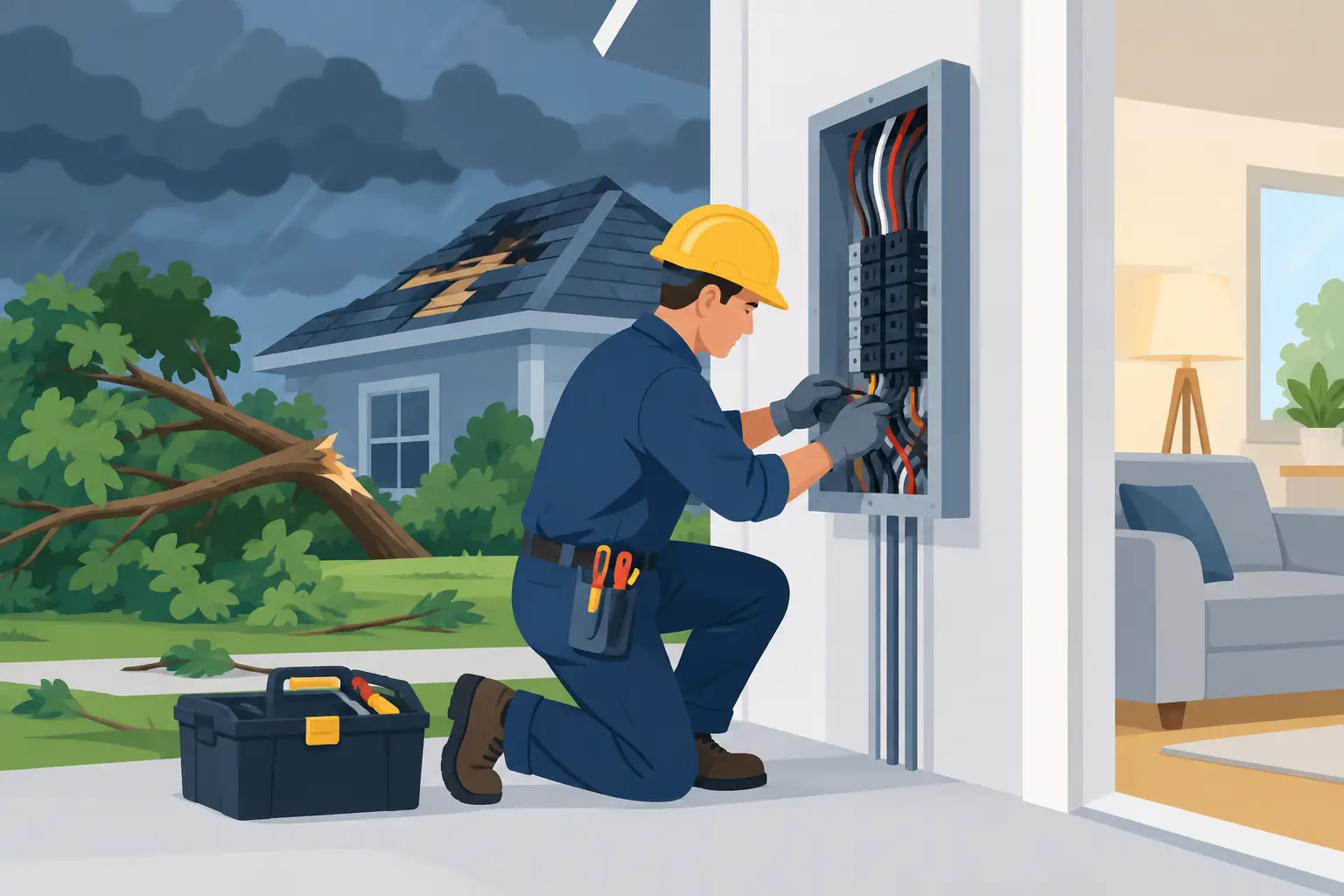
A storm can leave behind more than fallen branches and a wet basement. Wind-driven rain, lightning, flooding, and damaged utility equipment can affect wiring hidden behind walls, in attics, and inside your electrical panel. Storm damage rewiring is the process of finding and replacing electrical components that are no longer safe or reliable after a severe weather event.
The right repair may be as focused as replacing a water-damaged outlet and section of cable. In other homes, widespread moisture exposure, a lightning surge, or a fallen tree can call for more extensive repairs. The goal is not simply to get the lights back on. It is to restore a safe electrical system that your family can count on.
When Storm Damage Rewiring May Be Necessary
Not every outage or tripped breaker means your house needs rewiring. Sometimes the problem is on the utility side, or a single damaged device needs replacement. But wiring can be compromised when water enters a wall or panel, when a branch pulls on the service equipment, or when lightning sends a powerful surge through the system.
Call for professional electrical help if you notice burning odors, smoke, sparks, buzzing, hot outlets or switches, repeated breaker trips, dimming lights, or outlets that stopped working after the storm. A breaker that will not reset is another warning sign. Do not keep trying to force it on. It may be doing its job by shutting off power to damaged wiring or equipment.
Visible water near electrical equipment deserves immediate attention. This includes a wet panel, flooded outlets, soaked extension cords, or water in an area where appliances are plugged in. If it is safe to do so, stay clear of the area and keep family members and pets away. Do not touch a panel, outlet, or appliance while standing in water.
Damage is not always obvious. Water can travel through insulation, framing, and conduit before reaching a junction box or cable connection. A home may appear normal after it dries out, yet corrosion can later loosen connections and create overheating problems. That is why an electrical inspection after significant flooding or roof damage is a smart precaution.
What Can Be Damaged During a Storm
Electrical damage depends on what happened to the home. A roof leak may affect wiring in the attic and ceiling fixtures. Basement flooding can damage receptacles, equipment connections, and wiring installed close to the floor. Wind damage may pull on the weatherhead, meter equipment, or service entrance conductors. Lightning can damage electronics, breakers, appliances, and electrical connections even when there is no visible burn mark.
A qualified electrician will look beyond the nearest failed outlet. They may check the panel for moisture or heat damage, test affected circuits, inspect accessible wiring, and identify whether the issue is limited to one area or part of a larger problem. This diagnostic step matters because replacing a single outlet will not solve damage farther up the circuit.
Some materials are more vulnerable than others. Older wiring systems, deteriorated insulation, loose splices, and ungrounded circuits can turn storm exposure into a more serious repair. On the other hand, a newer system with properly installed protection may only need targeted replacement and testing. The scope should be based on the condition of the electrical system, not guesswork.
Safe Steps to Take Before the Electrician Arrives
Your first priority after a storm is personal safety. If power lines are down, stay far away and contact the utility company or emergency services. Treat every downed line as energized. Never attempt to move branches, debris, or fencing that may be touching a line.
If your home has water near electrical equipment, avoid entering the area until it has been assessed. Do not use a generator indoors, in a garage, or near doors and windows. Carbon monoxide is a separate but serious storm hazard. Generators also need proper connection equipment so they do not backfeed electricity into utility lines.
When there is no standing water and you can safely access the panel, turning off the main breaker may be appropriate if you smell burning, see smoke, or know that wiring has been exposed to water. If there is any doubt about safety, leave it alone and wait for a professional. Never remove the panel cover or try to dry internal components with a fan, heater, or towel.
It can help to take photos of visible damage from a safe distance for insurance documentation. Note which rooms lost power, which appliances or fixtures behaved unusually, and when the problem started. Those details give the electrician a clearer picture and can speed up troubleshooting.
How a Professional Handles Storm Damage Rewiring
Storm-related electrical work begins with a careful diagnosis. The electrician determines whether power is reaching the home correctly, whether the panel and service equipment are safe, and which circuits have been affected. Testing can identify open connections, damaged conductors, failed breakers, grounding concerns, and signs of surge damage.
The repair plan may include replacing damaged cable, outlets, switches, junction boxes, breakers, or portions of service equipment. Wiring that has been submerged or seriously contaminated often needs replacement rather than a quick drying period. Water and sediment can create corrosion inside places homeowners cannot see, and that corrosion can compromise connections over time.
If water damage is confined to a small area, targeted rewiring may be the practical choice. If multiple circuits, the electrical panel, or large sections of the home were affected, a broader repair may provide a safer and more lasting result. In homes with outdated wiring, storm repairs can also be a good time to address capacity needs for modern appliances, air conditioning, EV charging, or smart-home upgrades.
Permits and inspections may be required, particularly for service equipment, panel work, or substantial rewiring. That process protects the homeowner by confirming that the finished work meets current safety requirements. A professional should explain what needs to be replaced, why it is necessary, and what work will be completed before repairs begin.
Don’t Overlook Lightning and Surge Damage
Lightning damage can be easy to miss because the home may still have power. After a nearby strike, you may find that a television, internet equipment, garage door opener, appliance control board, or GFCI outlet no longer works. You may also see breakers tripping without an obvious reason.
Replacing a damaged device is only part of the solution. An electrician can check for damage at the panel and evaluate whether whole-home surge protection would add another layer of defense. Surge protection cannot prevent every loss from a direct strike, but it can help reduce damage from many electrical surges that enter through the service.
Choosing the Right Time to Call
Call immediately for burning smells, smoke, sparking, wet electrical equipment, damaged service equipment, or unexplained loss of power after a storm. For less urgent concerns, such as a single dead outlet after a roof leak or lights that flicker after lightning, schedule an inspection promptly rather than waiting for the issue to worsen.
Storm recovery already comes with enough uncertainty. Stella Electric provides residential troubleshooting and repair with clear flat-rate pricing and emergency service when electrical damage cannot wait. A trained electrician can separate a minor repair from a hidden safety problem and help you make a confident decision.
Once the weather clears, do not assume an electrical problem has cleared with it. A timely inspection and the right storm damage rewiring can protect your home long after the puddles are gone.