

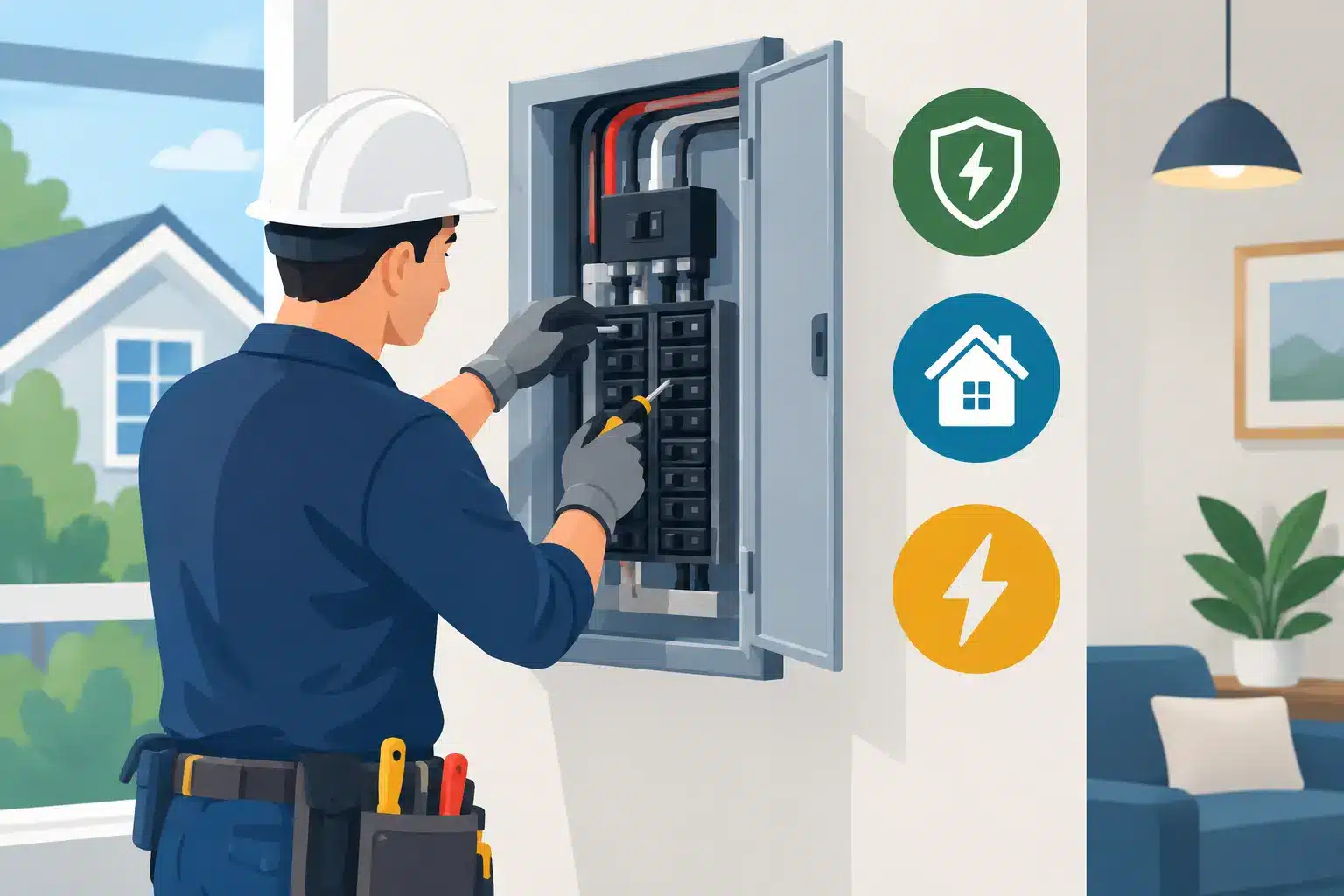
That new EV charger, induction range, finished basement, or hot tub may look like a single project. Behind the walls, though, each one asks more of the electrical system that powers your home. This home electrical service upgrade guide helps Baltimore-area homeowners recognize when their existing service may be reaching its limit and what a safe upgrade process looks like.
Electrical service work is not about adding the biggest panel available. It is about matching your home’s capacity, wiring, equipment, and future plans to the way you actually live. A properly planned upgrade can reduce recurring electrical problems, create room for modern conveniences, and help protect the people and electronics under your roof.
What an Electrical Service Upgrade Actually Includes
Your electrical service is the path electricity takes from the utility connection to your main panel and then to the circuits throughout the house. An upgrade may involve the meter equipment, service entrance cable, main disconnect, electrical panel, grounding and bonding components, and selected branch circuits.
The scope depends on what an electrician finds. Sometimes a crowded or damaged panel is the primary concern. In other homes, the incoming service is too small for planned equipment, or aging wiring and obsolete components need attention at the same time. A service upgrade is often paired with panel replacement, but the two are not always identical projects.
For example, a home can have a 200-amp panel but still need circuit work, grounding corrections, or a load calculation before adding high-demand equipment. On the other hand, a panel with open spaces may still be supplied by a service that cannot safely support the additional load. The right answer comes from an inspection, not a quick look at the breaker count.
Signs Your Home May Need More Electrical Capacity
An occasional tripped breaker does not automatically mean you need a service upgrade. A single overloaded circuit, a failing appliance, or a loose connection can cause similar symptoms. But repeated issues deserve professional troubleshooting, especially when they occur alongside plans for new electrical equipment.
Pay attention if lights dim when larger appliances start, breakers trip regularly, the panel feels warm, outlets are scarce, or extension cords have become a permanent part of daily life. Flickering lights, buzzing, a burning odor, discoloration around outlets or the panel, and shocks or tingles are more urgent warning signs. Turn off power to the affected area when you can do so safely and arrange prompt electrical service.
Older homes throughout Maryland, Virginia, Delaware, and Pennsylvania often have electrical systems that were adequate when installed but were never designed for today’s demand. Central air conditioning, kitchen appliances, home offices, entertainment equipment, multiple chargers, and smart devices all add up. Age alone does not condemn a system, but age combined with deterioration, undersized service, or outdated equipment calls for a closer look.
Projects That Commonly Trigger an Upgrade
Homeowners often discover capacity issues while planning an improvement rather than during an emergency. Level 2 EV chargers, electric dryers, electric water heaters, heat pumps, induction cooking, hot tubs, workshop tools, and finished basements can all require dedicated circuits. Some homes can accommodate one new load without a service change. Others need more capacity before the project can move forward safely.
A renovation is also a smart time to address electrical work that would be disruptive later. Opening walls may reveal older wiring, insufficient outlets, or missing modern safety protections. Coordinating the electrical plan before drywall goes up is usually more practical than adding changes after the room is complete.
A Home Electrical Service Upgrade Guide for Planning Ahead
Start with your goals, not a panel size. Tell your electrician what you want to add now and what you may add over the next several years. A homeowner who is considering an EV in two years, a kitchen remodel next year, and a heat pump later has different needs than someone replacing a damaged panel with no major load changes planned.
A qualified electrician should perform a load calculation. This considers the home’s square footage, existing appliances, heating and cooling equipment, and planned loads under applicable electrical requirements. It is more useful than guessing based on the age of the house or choosing a service size because a neighbor installed one.
Next, expect the electrician to inspect the panel condition, available breaker spaces, service conductors, meter setup, grounding and bonding, and visible wiring concerns. They should also identify whether the utility company, local permit office, or homeowners association has requirements that affect scheduling. Service upgrades often require coordination because the utility may need to disconnect and reconnect power.
Clear communication matters here. You should know what equipment is being replaced, whether power will be temporarily off, which permits and inspections are needed, and whether related repairs are recommended or required. Flat-rate pricing can make planning easier when it clearly explains the scope of work rather than leaving you to sort through open-ended hourly charges.
Panel Upgrades, Subpanels, and Service Upgrades Are Different
These terms are sometimes used interchangeably, but they solve different problems.
A panel upgrade replaces an existing electrical panel or adds modern breakers and safety features when the service capacity is otherwise suitable. This may be appropriate for a damaged, obsolete, overcrowded, or unreliable panel.
A subpanel adds circuit space in a specific area, such as a garage, addition, or workshop. It can improve convenience and organization, but it does not automatically increase the total amount of power available to the home.
A service upgrade increases or modernizes the capacity of the electrical service feeding the house. It may include a new main panel, but it can also require changes outside the panel. The best option depends on the load calculation, condition of existing equipment, and your plans for the property.
Safety and Code Details That Should Not Be Skipped
Electrical service upgrades involve high-energy equipment and utility connections. This is not a homeowner DIY project, even for someone comfortable replacing a light fixture or outlet cover. Improper work can create shock, fire, and equipment-damage risks that may not be obvious until much later.
Permits and inspections provide an added layer of protection. Local requirements vary, and code rules can differ by jurisdiction and by the age and layout of the home. A professional electrician can determine what applies to your project and complete the work accordingly.
Modern upgrades may also include surge protection at the panel and updated protective devices where required or appropriate. Whole-home surge protection does not replace quality power strips for sensitive electronics, but it can help reduce the impact of voltage spikes from utility events and large equipment cycling on and off. Ask how protective measures fit into the overall plan rather than treating them as an afterthought.
How to Prepare for Upgrade Day
Once the project is scheduled, protect the work area by clearing access to the electrical panel, meter location, and any spaces the electrician has identified. Plan for a temporary power interruption. Charge phones and backup batteries, avoid scheduling remote work that depends on uninterrupted internet, and make arrangements for refrigerated medications or other essential equipment if the outage may be extended.
If someone in the home relies on medical equipment, discuss that need before the appointment. The electrician can explain the expected outage window, but homeowners should also have an appropriate backup plan for critical devices. Do not assume a generator, battery, or extension cord is safe to use without confirming the setup.
After installation, ask for a clear walkthrough. You should understand the location of the main disconnect, how circuits are labeled, what work was performed, and what future additions the system is designed to support. Good labeling saves time during an outage and helps future service professionals work more efficiently.
Choose a Service Partner Who Plans for the Whole Home
The cheapest quote is not always the lowest-cost outcome if it skips needed permits, leaves unresolved safety concerns, or fails to account for the equipment you plan to install next. At the same time, not every home needs the largest possible upgrade. A trustworthy recommendation should explain why a specific scope fits your home.
Look for an electrician who can diagnose the current problem, calculate the load, explain options in plain language, and provide transparent pricing before work begins. For homeowners who need help with panel capacity, EV charging, rewiring, or a safety concern, Stella Electric can assess the system and recommend a practical path forward. A well-planned electrical upgrade should leave your home ready for what comes next, not merely patched for what failed today.








