

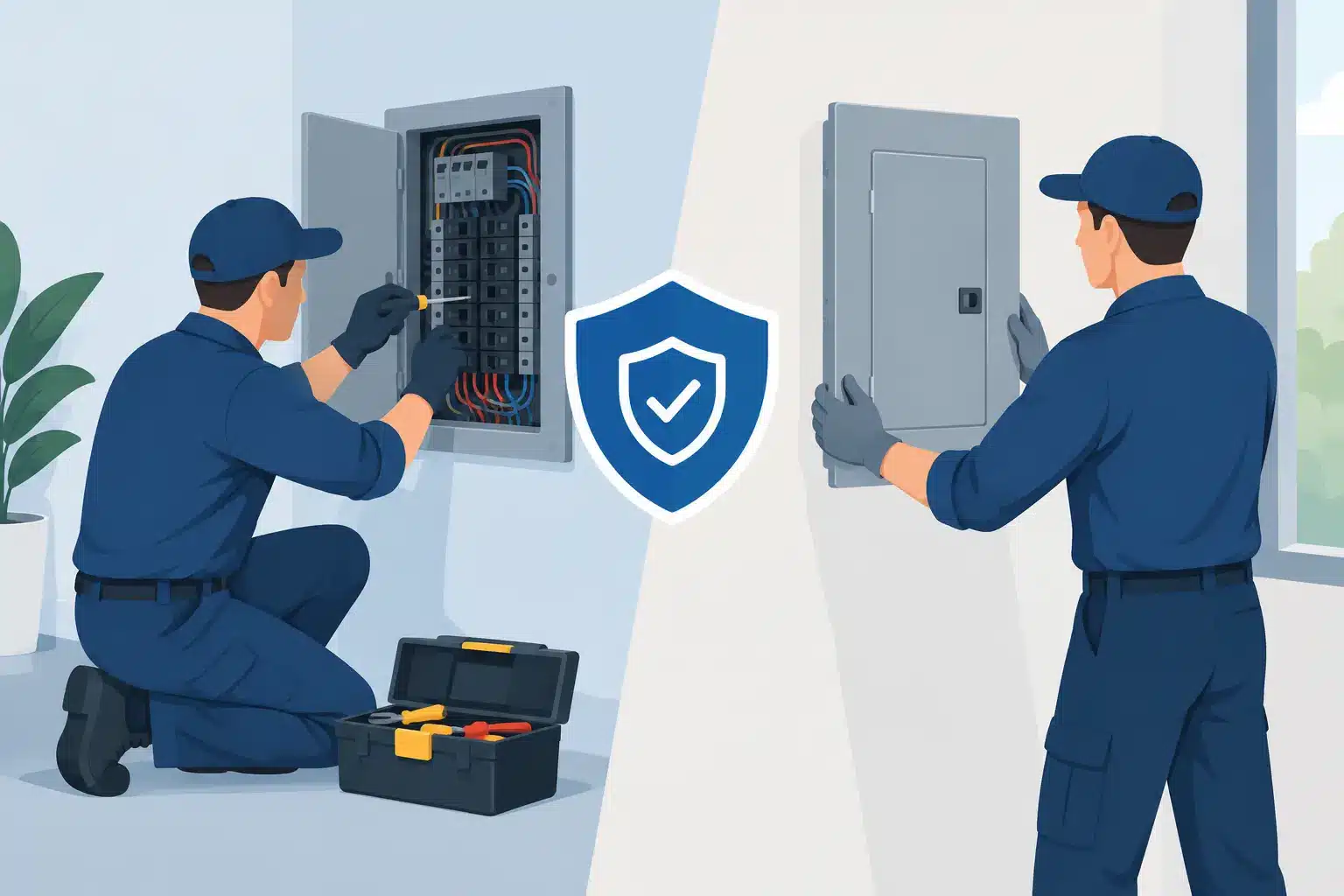
A breaker that keeps tripping, lights that flicker when the dryer runs, or a panel that feels warm to the touch can make any homeowner wonder about panel repair versus replacement. The right answer is not always “replace it,” but electrical panels are too central to your home’s safety to guess. A qualified electrician should identify the source of the problem, assess the condition of the equipment, and explain whether a targeted repair can provide a safe, lasting result.
When Electrical Panel Repair Makes Sense
Electrical panel repair is often the practical choice when the panel enclosure, bus bars, wiring connections, and overall capacity are in good condition. Many apparent panel problems come from a single failed component or a condition outside the panel itself.
For example, a worn circuit breaker may trip too easily or fail to reset properly. Replacing that correctly matched breaker can restore reliable protection without replacing the entire panel. A loose connection, damaged neutral wire, corrosion at one terminal, or a mislabeled circuit may also be repairable after careful troubleshooting.
A repair may be appropriate when the issue is isolated and the panel still meets the home’s electrical needs. That means it has room for properly installed breakers, shows no signs of overheating, and is compatible with modern safety requirements. The repair should address the cause, not simply stop the immediate symptom. Resetting a breaker repeatedly or installing a larger breaker to prevent trips can create a fire risk if the circuit wiring cannot safely carry the load.
Signs a focused repair may be enough
If one breaker is faulty, a single connection is loose, or a branch circuit has a problem, repair can be a sensible solution. Homeowners may notice one room losing power, one appliance tripping a breaker, or a breaker that will not remain on even after the appliance is unplugged.
An electrician can test the circuit, breaker, voltage, and connections to determine where the fault begins. Sometimes the panel is doing exactly what it should do by shutting off power before wiring overheats. In that case, the repair may involve the appliance, outlet, wiring, or circuit load rather than the panel itself.
Panel Repair Versus Replacement: The Safety Difference
The key question in panel repair versus replacement is whether the existing panel can continue to distribute power safely. A panel is more than a metal box full of switches. Inside are energized components that must make secure contact, manage heat, and carry your home’s electrical load every day.
Replacement is usually the safer choice when the panel has physical damage, widespread corrosion, burned or melted components, damaged bus bars, water intrusion, or evidence of repeated overheating. These conditions can affect more than one circuit and may not be reliably corrected by replacing a single breaker.
Warning signs that deserve prompt professional attention include a burning odor, buzzing or crackling sounds, discoloration around breakers, a panel that is hot, sparks, or frequent unexplained breaker trips. Do not remove the panel cover or touch internal components yourself. If you see smoke, active sparking, or a serious electrical burning smell, move away from the area and seek emergency electrical help.
Older equipment can also affect the decision. Some panels may have limited capacity, discontinued parts, design concerns, or a history that warrants closer inspection. Age alone does not automatically mean replacement, but it should not be ignored. What matters is the panel’s condition, capacity, service history, and ability to support the way your household uses power now.
Capacity Can Turn a Repair Into an Upgrade Project
A panel can be in fair physical condition yet still be too small for a modern home. Homes built decades ago were not designed around EV chargers, induction ranges, heat pumps, home offices, hot tubs, high-powered kitchen appliances, and expanded entertainment systems.
If your panel is full, uses double-tapped breakers, has overcrowded wiring, or cannot accommodate a needed dedicated circuit, a replacement or service upgrade may make more sense than patching around the limitation. Adding a subpanel can be an option in some homes, but it depends on the capacity of the main service and the condition of the existing equipment.
A proper decision starts with a load calculation. This calculation looks at the electrical demands of major appliances, heating and cooling equipment, lighting, outlets, and planned additions. It helps determine whether the home’s service can safely support a Level 2 EV charger, new HVAC equipment, a finished basement, or other improvements.
It is also helpful to separate a panel replacement from a service upgrade. Replacing the panel may mean installing new equipment with the same service capacity. A service upgrade may involve increasing the amount of power delivered to the home, which can include changes to the meter equipment, service conductors, grounding, permits, and coordination with the utility. The scope depends on your home and local requirements.
Cost Should Include the Long-Term Fix
Repair is generally less expensive than replacing a panel, especially when the issue is one breaker or connection. But the least expensive repair today is not always the best value if the panel has ongoing safety concerns, no room for future circuits, or damage that will lead to another service call.
Replacement costs vary based on panel size, accessibility, number of circuits, required code updates, the condition of existing wiring, and whether the electrical service needs to be upgraded. Older homes may need grounding improvements, updated bonding, AFCI or GFCI protection where required, and corrections to previous work.
A trustworthy estimate should make the scope clear. Homeowners should know whether the price covers permits, inspection coordination, labeling, required safety devices, and repairs to wiring connections found during the work. Flat-rate pricing can make it easier to plan without worrying that a necessary safety repair will become an open-ended hourly charge.
Questions to Ask Before You Decide
Before approving repair or replacement, ask the electrician what failed, what caused it, and whether the rest of the panel shows similar wear. Ask whether the panel has enough capacity for your current lifestyle and any projects you expect in the next few years.
You should also ask whether replacement parts are readily available and approved for that panel, whether a permit is required, and what safety or code corrections are included in the proposed work. Clear answers help you compare options based on safety and long-term value, not just the initial price.
For a homeowner, the most reassuring recommendation is one supported by testing and a plain-language explanation. A skilled electrician should be able to show you the issue, explain the risk without scare tactics, and offer a practical path forward.
What to Do if You Suspect a Panel Problem
Start by paying attention to patterns. Note which circuits trip, what was running at the time, whether lights dim, and whether the issue happens during rain or after using a particular appliance. This information can speed up diagnosis.
Do not keep resetting a breaker that trips immediately, and do not attempt to add circuits, replace breakers, or tighten panel connections on your own. Panels can contain live parts even when the main breaker is off. For homes across the Baltimore area and the Mid-Atlantic, Stella Electric can evaluate panel concerns, explain the available options, and complete repairs or upgrades with safety at the center of the work.
A repaired panel should leave you confident that an isolated issue has been corrected. A replaced panel should give your home a safer foundation for the power you use now and the improvements you plan next.








