

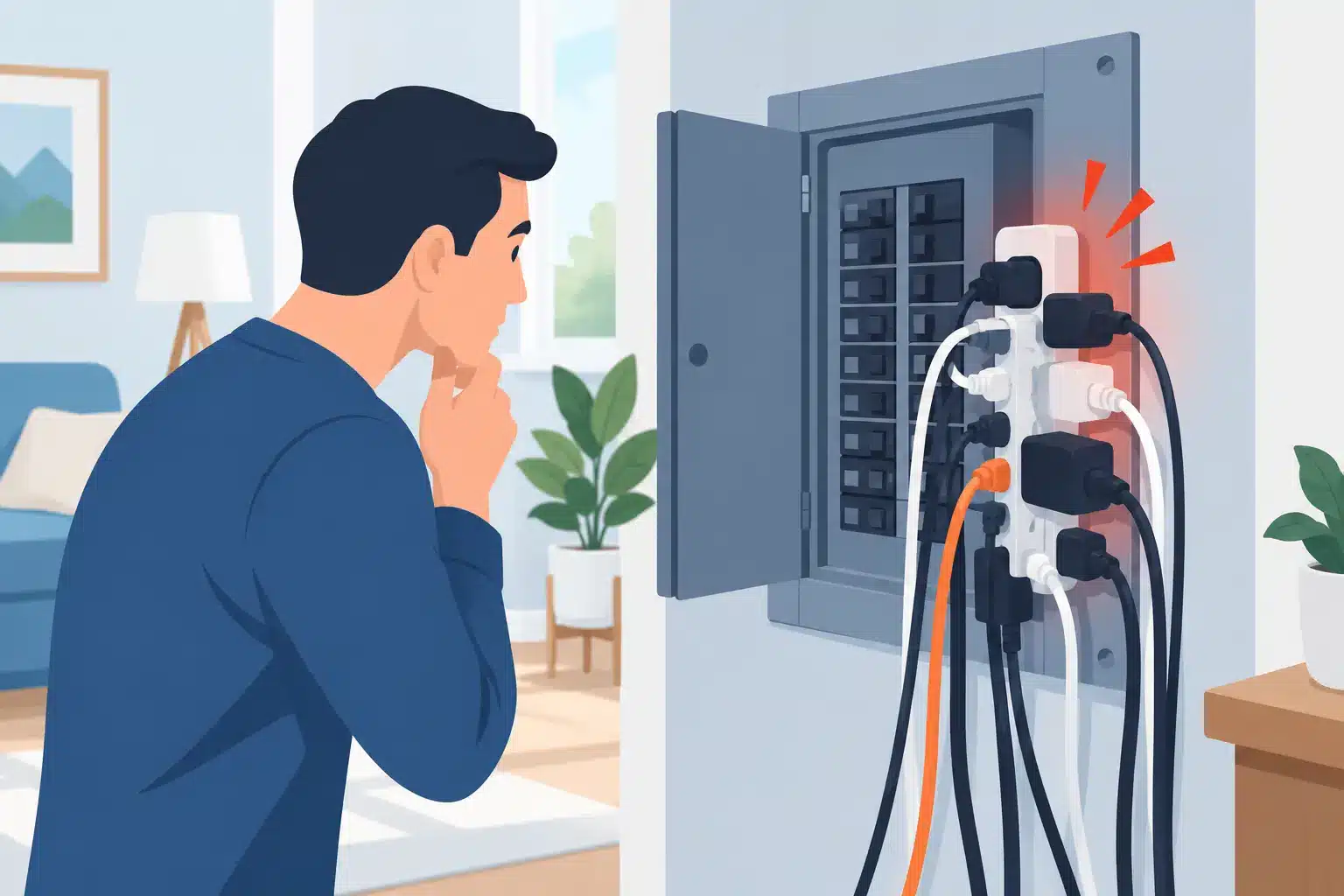
A space heater clicks on in the bedroom, the microwave starts in the kitchen, and suddenly the lights dim or a breaker trips. That pattern is one of the clearest answers to how to identify overloaded circuits: your home is asking one electrical path to carry more power than it was designed to handle.
A tripped breaker can be inconvenient, but it is also doing an essential safety job. It shuts off power before excess current overheats wires, outlets, or connections inside walls. The goal is not to keep resetting the breaker and carry on. The goal is to find out what is causing the overload and make the circuit safe for the way your household actually uses electricity.
What an overloaded circuit means
Every circuit in your electrical panel has a rating, commonly 15 or 20 amps in living areas, bedrooms, kitchens, and bathrooms. That circuit supplies power to a defined group of outlets, lights, or appliances. When the combined demand of everything running on that circuit exceeds its safe capacity, the breaker trips.
An overload is different from every electrical problem. A short circuit or ground fault can trip a breaker immediately and may point to damaged wiring, moisture, or a faulty appliance. An overloaded circuit usually happens when several normal devices operate at once. Still, the symptoms can overlap, so a repeated breaker trip deserves professional attention rather than guesswork.
The risk also depends on your home. Older Baltimore-area homes may have fewer circuits than modern households need. A room that once powered a lamp and a radio may now support a TV, gaming system, laptop chargers, a window AC unit, and a space heater. Homes adding EV charging, smart devices, finished basements, or major kitchen appliances may need a panel assessment or new dedicated circuits.
Signs you may have an overloaded circuit
A breaker that trips when you use a particular combination of appliances is the most common sign. For example, the kitchen breaker may trip when the toaster oven and coffee maker run together, or a bedroom breaker may trip when a portable heater starts while electronics are already plugged in.
Other warning signs deserve attention, even if the breaker has not tripped yet:
- Lights that dim, flicker, or brighten when an appliance turns on
- Outlets, switches, plugs, or extension cords that feel warm
- A buzzing sound from an outlet, switch, panel, or plugged-in device
- A burning odor, discoloration, scorch marks, or melted plastic
- A breaker that trips often or will not stay reset
- Power strips and extension cords used as permanent solutions
Warmth, odors, discoloration, and buzzing are not minor inconveniences. Stop using the affected outlet or device and arrange for an electrician to inspect it. Do not cover the smell with air freshener, paint over a discolored outlet, or assume the issue will resolve after the breaker is reset.
How to identify overloaded circuits safely
Start by noticing the timing. Does the breaker trip only when certain equipment runs at the same time? Write down what was on when the power went out. The answer may be obvious, such as a space heater and hair dryer sharing a bathroom circuit, or it may take a few days to spot a pattern.
Next, go to the electrical panel and identify the tripped breaker. A tripped breaker may sit between the ON and OFF positions rather than fully switching off. To reset it, turn it firmly to OFF first, then back to ON. If it trips again right away, leave it off. Repeated resetting can hide a serious wiring or appliance problem.
After the circuit is off, unplug the devices that were running on it. Reset the breaker once, then reconnect and use devices one at a time. If the breaker remains on until several items are operating together, an overload is likely. If it trips as soon as one particular appliance is plugged in or turned on, that appliance may be faulty instead.
Avoid touching bare wires, opening the electrical panel cover, or replacing a breaker with a larger size. A larger breaker does not create more safe capacity. It can allow wiring to overheat before the breaker responds, which increases fire risk. Circuit changes, panel work, and wiring repairs should be handled by a qualified electrician.
Check the biggest power users first
High-wattage appliances are frequent overload triggers because they draw substantial current. Portable space heaters, hair dryers, curling irons, toaster ovens, air fryers, microwave ovens, vacuum cleaners, portable AC units, and electric kettles can each use a large share of a standard circuit.
A simple wattage estimate can help explain the issue. Divide an appliance’s watts by 120 volts to estimate amps. A 1,500-watt space heater uses about 12.5 amps. On a 15-amp circuit, that leaves very little room for a TV, lamp, computer, or anything else already connected. Electrical circuits are generally better used below their maximum rating for ongoing loads, which is one reason a circuit can seem fine until one more device turns on.
This calculation is useful for awareness, not as a substitute for diagnosis. Labels can be inaccurate, multiple rooms may share one circuit, and hidden connections can complicate the picture.
Common places overloads happen
Kitchens are a frequent trouble spot because countertop appliances draw significant power. Modern electrical standards call for multiple dedicated small-appliance circuits, but older kitchens may not have enough capacity for current cooking habits.
Bathrooms can also overload quickly. A hair dryer, curling tool, heated styling device, and outlet charger can add up, especially if the bathroom shares a circuit with another space. Garages, laundry rooms, home offices, and finished basements are other common areas because homeowners often add equipment over time without adding circuits.
Holiday decorations and temporary outdoor lighting deserve a mention, too. Use equipment rated for outdoor use, inspect cords for damage, and avoid connecting long chains of power strips or extension cords. If seasonal lights routinely trip a breaker, the answer is not to force the breaker back on repeatedly.
Reduce demand without creating a new hazard
The immediate fix may be as simple as running high-demand appliances at different times. Do not use a space heater on the same circuit as other major loads, and avoid plugging high-wattage appliances into power strips unless the manufacturer specifically permits it. Power strips add outlets, not circuit capacity.
Extension cords are intended for temporary use. If you regularly rely on one to power a room, workshop, entertainment center, or office, the home likely needs more outlets or a properly installed circuit. That improvement is safer, cleaner, and more convenient than routing cords under rugs or across walking paths.
For a single appliance causing trouble, stop using it until it can be tested, repaired, or replaced. A damaged cord, loose plug, or failing motor can cause a breaker to trip even when the circuit is otherwise adequate.
When an electrician should inspect the circuit
Call for professional service if a breaker trips repeatedly, you notice heat or burning smells, outlets are damaged, lights flicker throughout the home, or you cannot identify a clear cause. These signs can indicate loose connections, deteriorated wiring, an undersized circuit, panel issues, or a faulty appliance.
An electrician can trace the circuit, test the outlet and breaker, measure demand, and determine whether the best solution is a repair, a dedicated circuit, additional outlets, or an electrical panel upgrade. The right answer depends on the home’s wiring, the panel’s available capacity, and how you use the space. A dedicated circuit for a microwave, sump pump, home office, garage equipment, or EV charger is often a practical long-term improvement.
Stella Electric provides safety-focused troubleshooting for homeowners who need clear answers, not repeated breaker resets. A trained professional can identify the source of the problem and explain the repair options before work begins.
A breaker that trips once after an obvious overload may simply be protecting your home. A breaker that keeps demanding your attention is a reason to act. Give your electrical system the capacity and care it needs, so everyday comforts stay convenient and your home stays protected.








