

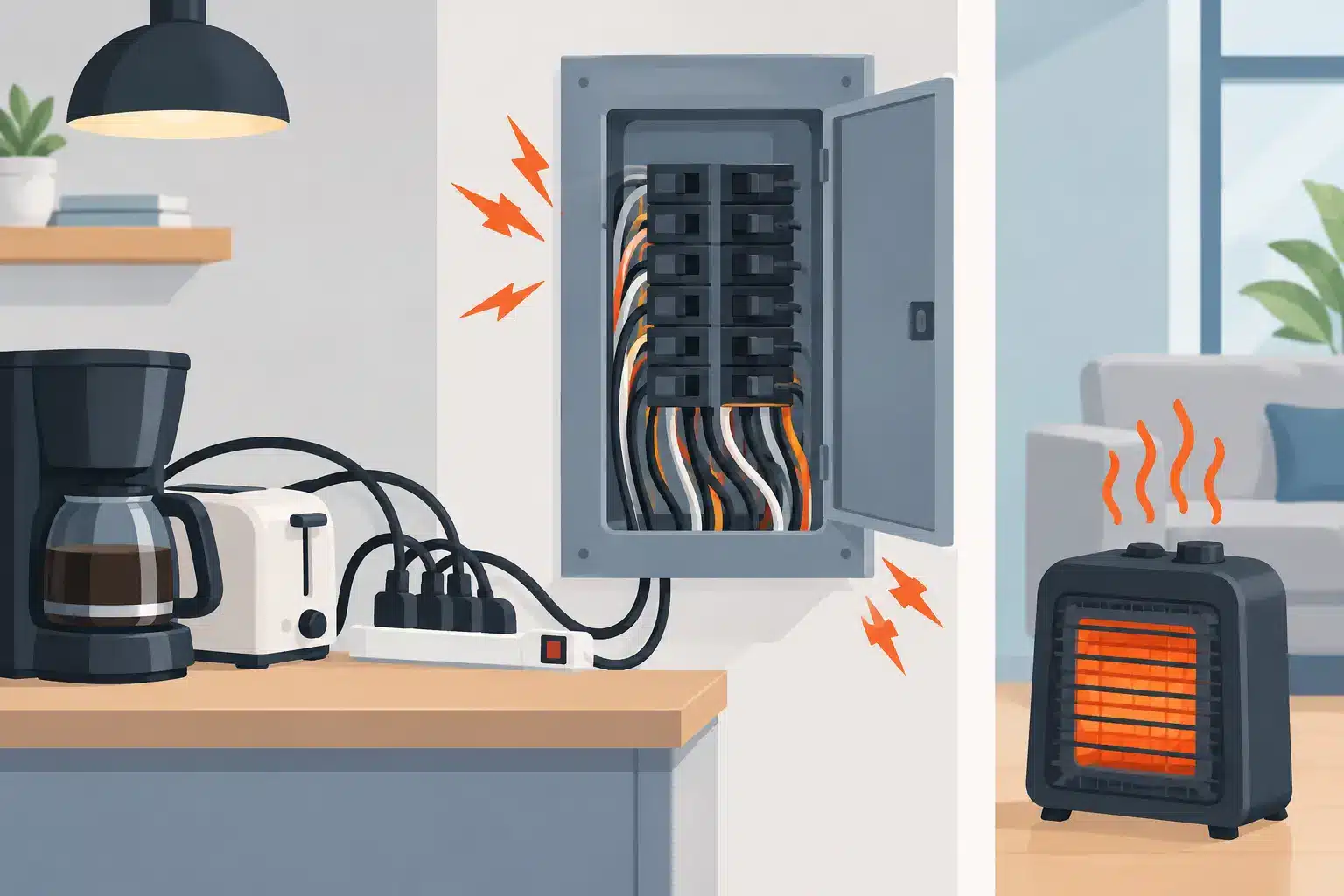
A breaker that trips once after a hair dryer and space heater run together may be doing exactly what it is designed to do. But repeated problems are different. Recognizing the top signs of circuit overload can help you address an electrical issue before it becomes a damaged appliance, a failed panel, or a fire risk.
Modern homes ask more of their electrical systems than older wiring was built to handle. Home offices, large TVs, kitchen appliances, EV chargers, portable heaters, smart-home equipment, and added lighting all increase demand. If your electrical system cannot safely supply that demand on a particular circuit, it needs professional attention – not a workaround.
What Is a Circuit Overload?
A circuit overload happens when the devices drawing power from one circuit need more electricity than the wiring and breaker are rated to provide. The breaker trips to cut off the power before the wire overheats. That safety response is a good thing, but it should not become part of everyday life.
An overload is not always caused by a single high-powered appliance. It can develop when several ordinary devices share a circuit, such as a microwave, coffee maker, toaster, and phone chargers all connected in the same kitchen area. It can also point to an outdated panel, insufficient circuits for a remodeled space, or wiring that no longer meets your household’s needs.
A tripped breaker can also be caused by a short circuit, ground fault, failing appliance, or loose electrical connection. Those issues can carry serious risks, which is why repeated breaker trips deserve a proper diagnosis instead of guesswork.
Top Signs of Circuit Overload You Should Not Ignore
1. Breakers trip repeatedly
A breaker that trips occasionally after an obvious demand spike may simply be protecting the circuit. A breaker that trips every time you use a particular appliance, outlet, or combination of devices is telling you something more.
Avoid repeatedly resetting it and carrying on. If the breaker trips again after you reset it, turn it off and unplug what you can from that circuit. A licensed electrician can determine whether you are dealing with an overload, a faulty breaker, damaged wiring, or an appliance problem.
2. Lights dim, flicker, or brighten when appliances start
Do your kitchen lights dip when the microwave turns on? Does a bathroom light flicker when a hair dryer is running? Small changes can sometimes result from normal motor startup, but frequent or dramatic dimming should not be dismissed.
This symptom may mean a circuit is carrying too much load. It may also indicate a loose connection, a problem in the electrical panel, or an issue with the incoming electrical service. If lights brighten unexpectedly as well as dim, arrange an inspection promptly. Voltage irregularities can damage sensitive electronics and may signal a more significant electrical concern.
3. Outlets or switch plates feel warm
An outlet, plug, wall switch, or cover plate should not feel hot. Mild warmth from a charger brick or a device that naturally generates heat is different from warmth at the outlet itself. If an outlet is warm, discolored, loose, or gives off a burning odor, stop using it.
Turn off the breaker if you can identify the circuit safely, and do not plug another device into the same outlet. Heat can result from overloaded wiring, but it can also come from worn contacts, loose connections, or damaged components. All require a professional repair.
4. You rely on power strips and extension cords
A power strip can be useful for low-demand electronics, but it is not a permanent solution to a shortage of outlets or circuits. Daisy-chaining power strips, running extension cords under rugs, or using one strip for multiple heat-producing appliances creates an avoidable fire risk.
This is especially common in older homes where bedrooms, living rooms, garages, and home offices were not designed for today’s electrical load. The right fix may be additional outlets, a dedicated circuit, or an electrical panel upgrade – not another adapter.
5. Appliances lose power when another device runs
If one appliance shuts off, struggles, or causes a nearby outlet to stop working when another large appliance starts, the circuit may be overloaded. You might notice this with a window AC unit, vacuum, air fryer, microwave, portable heater, or garage tools.
High-demand equipment should often have dedicated circuits. That includes many kitchen appliances, laundry equipment, sump pumps, garbage disposals, HVAC equipment, hot tubs, and Level 2 EV chargers. The exact requirements depend on the equipment, wiring, and local code, so a professional assessment matters before adding major electrical loads.
6. You hear buzzing, crackling, or popping
Your electrical panel and outlets should operate quietly. A buzzing outlet, crackling switch, or popping sound near a breaker is not a normal side effect of using electricity.
These sounds can point to a loose connection, arcing, failing breaker, or damaged wiring. Because arcing produces heat at a connection point, it can raise fire risk even before a breaker trips. Turn off power to the affected area if it is safe to do so and request prompt electrical service.
7. You smell burning or see discoloration
A sharp burning smell, melted plastic, scorch marks, or brown discoloration around an outlet, switch, plug, or panel calls for immediate action. Do not wait to see whether the issue happens again.
If there is smoke, visible sparking, or a suspected active electrical fire, leave the home and call 911. For a burning odor without an active fire, turn off power at the main breaker only if you can do so without approaching heat, smoke, or damaged equipment. Then contact an electrician for emergency troubleshooting.
Why Overloads Are More Common in Older Homes
Many Baltimore-area and Mid-Atlantic homes have electrical systems that were installed long before modern household power needs. Even a well-maintained older home may have too few circuits, undersized service capacity, aging breakers, or ungrounded outlets in certain areas.
Renovations can add demand quickly. A finished basement may become an office, gym, or entertainment room. A garage may need an EV charger. A bathroom update may add heated flooring, upgraded lighting, and exhaust fans. Each improvement is valuable, but the home’s electrical infrastructure needs to keep pace.
That does not mean every flicker requires a full rewire or panel replacement. Sometimes the practical repair is replacing a failed outlet, moving loads to different circuits, or installing one dedicated circuit. Other times, a panel upgrade is the safer long-term choice. The answer depends on the condition and capacity of your existing system, as well as what you plan to power next.
What to Do When You Suspect an Overload
Start by reducing the load. Unplug nonessential devices from the affected circuit, particularly anything that produces heat. Hair dryers, portable heaters, toaster ovens, air fryers, curling irons, and space heaters can draw substantial power.
Then check your electrical panel for a tripped breaker. A tripped breaker often sits between the on and off positions. Move it fully to off before resetting it to on. If it trips immediately or soon after you restore power, leave it off. Do not replace a breaker with a larger one or attempt to force it to stay on. An oversized breaker can allow wiring to overheat before the breaker reacts.
Make a note of what was running at the time. That information helps an electrician identify whether the issue is a true overload, a defective appliance, or a fault within the wiring. If the concern involves heat, burning smells, buzzing, visible damage, or frequent trips, schedule service promptly.
Preventing Future Circuit Overloads
The safest prevention is matching your electrical system to the way your household actually lives. That may include adding dedicated circuits for demanding equipment, installing properly placed outlets, replacing worn devices, or upgrading an outdated panel.
For technology-forward homes, plan ahead. An EV charger, hot tub, workshop equipment, or major kitchen renovation should be evaluated before installation, not after breakers begin tripping. A qualified electrician can calculate electrical load, identify available capacity, and recommend a solution that supports both current use and future plans.
Stella Electric can troubleshoot recurring breaker trips and electrical warning signs, then explain the repair or upgrade options in clear terms with flat-rate pricing. You should feel confident about what is happening in your home and what it will take to correct it.
Your breakers are there to protect you, but they should not have to work overtime. When your home starts showing warning signs, a timely electrical inspection can turn an ongoing nuisance into a safer, more reliable system for your family.








