

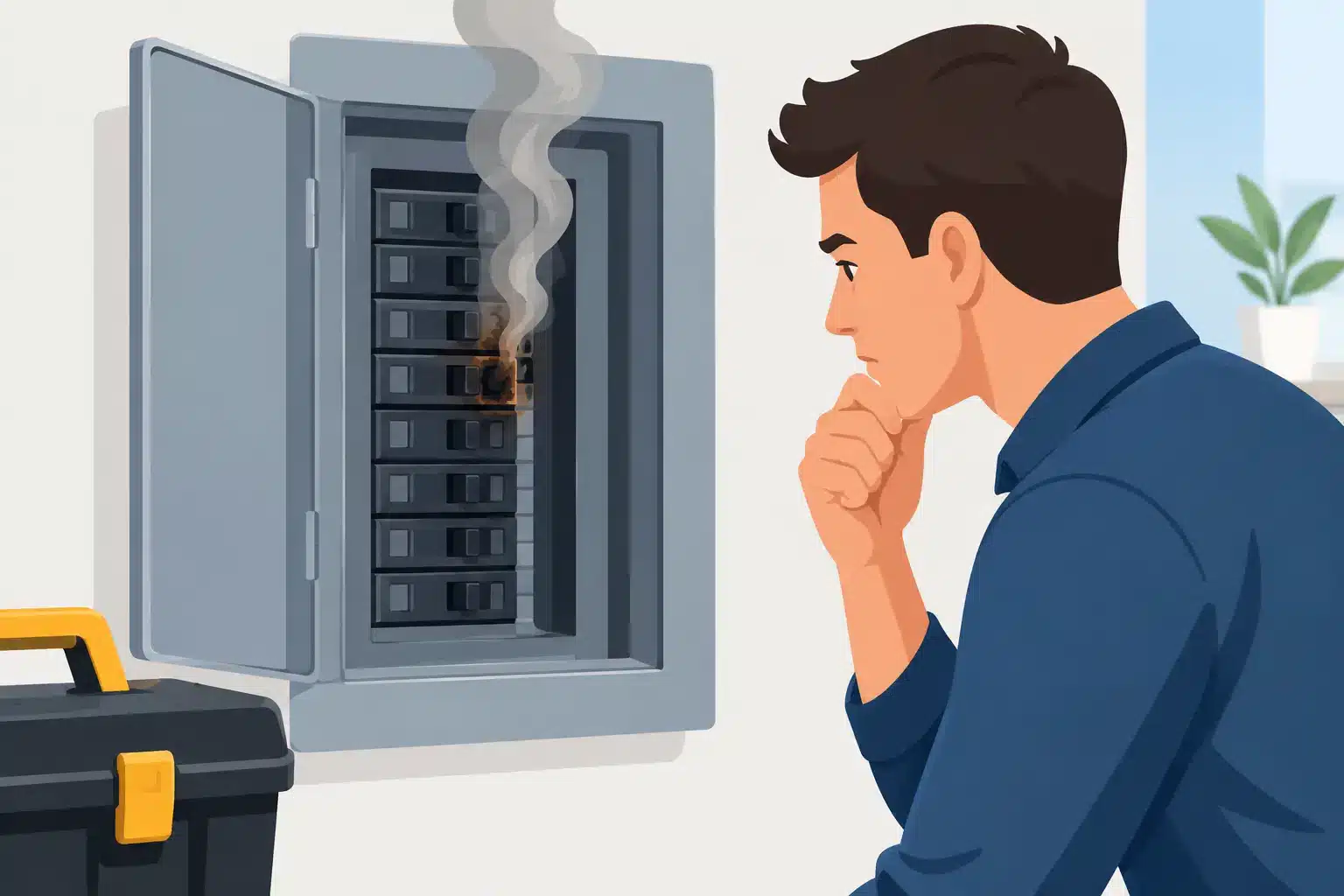
A burnt odor near an electrical panel is not a household smell to wait out. If you are asking, “why does breaker smell burnt,” treat it as a possible warning that heat, arcing, or a failing connection is developing inside the panel. The right next step depends on what you see and hear, but the safest choice is usually to stop using the affected circuit and arrange a professional electrical inspection promptly.
Why Does a Breaker Smell Burnt?
A circuit breaker is designed to stop electrical flow when a circuit pulls more current than it can safely handle. But a breaker can still become hot, or smell burnt, when there is a problem at the breaker itself, its connection to the panel, or the wiring serving the circuit.
The smell may resemble hot plastic, melting insulation, singed dust, or an acrid electrical odor. Even if the breaker has not tripped, that odor can signal a condition that deserves attention. Breakers do not always trip when a loose connection is overheating, especially if the current remains below the breaker’s rated limit.
A brief dusty smell can occur when an electrical component is first energized after a long period of disuse. Still, a persistent or strong burnt smell at the panel should never be dismissed as normal dust. Electrical heat can damage insulation and metal connections long before a homeowner sees smoke.
What to Do Right Away
Start by keeping people away from the panel, particularly children and pets. Do not remove the panel cover, touch exposed metal, or try to tighten anything inside. Panel work involves energized components even when individual breakers are switched off.
If you can safely identify the circuit involved, turn off the affected breaker without touching anything unusual or damaged. For example, if the odor appeared after running a space heater in a bedroom, turning off that bedroom circuit can help prevent further load on it. Do not repeatedly reset a breaker that trips, and do not force a breaker that feels stuck or unusually hot.
Call emergency services and leave the home if you notice smoke, flames, sparking, loud buzzing, popping sounds, or a panel that is hot to the touch. If conditions are calm but the burnt odor remains, schedule a licensed electrician as soon as possible. Avoid using the circuit until it has been checked.
Common Reasons a Breaker Smells Burnt
An overloaded circuit
Overloads are common in older homes or rooms with too few outlets. A single circuit may be trying to supply a space heater, microwave, air fryer, hair dryer, gaming equipment, window air conditioner, or several chargers at once. That demand can create excessive heat over time.
In a properly functioning system, the breaker should trip before wiring is damaged. However, recurring overloads can weaken a breaker and expose other issues, such as a loose terminal. A tripping breaker is not an inconvenience to work around. It is a safety device doing its job.
A loose wire or breaker connection
Loose connections are one of the more serious causes of a burnt electrical smell. Electricity moving through a loose connection creates resistance, and resistance creates heat. That heat can discolor the breaker, damage wire insulation, and eventually cause arcing.
This can happen at the breaker terminal, the neutral bar, the main lugs, or at an outlet or appliance farther along the circuit. The smell may seem strongest at the panel even when the root cause is elsewhere, which is why a complete diagnosis matters.
A failing or damaged breaker
Breakers are mechanical safety devices, and they can wear out. Internal components may fail after years of use, repeated overloads, electrical surges, or manufacturing defects. A failing breaker may smell hot, trip without an obvious reason, refuse to reset, or remain on when it should trip.
Replacing a breaker is not always the whole repair. An electrician must determine why it failed and confirm the replacement is correctly matched to the panel and circuit. Installing the wrong breaker type or size can create a much larger safety problem.
Arcing inside the panel or circuit
Arcing occurs when electricity jumps across a gap instead of traveling through a solid connection. It can produce intense heat, a sharp burning odor, crackling, and dark marks around the affected component. Arcing may result from loose conductors, damaged insulation, water exposure, pests, or deteriorated equipment.
Because arcing can ignite nearby materials, it requires prompt professional attention. A standard breaker may not detect every type of arc fault. Depending on the circuit and local code requirements, an electrician may recommend arc-fault protection as part of the repair or upgrade.
Water, corrosion, or panel damage
Moisture is especially concerning around electrical equipment. A damp basement, water intrusion near a service entrance, condensation, or a past leak can corrode connections inside a panel. Corroded metal does not conduct electricity reliably, which can lead to resistance and overheating.
Signs may include rust, white or greenish residue, staining around the panel, or a smell that appears after heavy rain. Do not assume the issue will disappear once the area dries. Corrosion can continue affecting connections long after the original moisture source is gone.
An outdated or undersized electrical panel
Many homes across the Baltimore area and the Mid-Atlantic have panels that were adequate decades ago but are now serving far more equipment. Modern households may add central air, larger kitchen appliances, home offices, EV chargers, smart-home devices, hot tubs, or finished-basement circuits.
An older panel is not automatically unsafe, and age alone does not mean replacement is necessary. But a panel with heat damage, frequent tripping, limited capacity, known equipment concerns, or crowded wiring may need repair or an upgrade. A qualified evaluation provides a clearer answer than simply replacing a breaker and hoping for the best.
Do Not Cover Up the Problem
It can be tempting to use less power for a day, spray an odor eliminator, or wait to see whether the smell returns. Those choices may make the symptom less noticeable, but they do not correct heat damage or a failing connection.
Never increase a breaker’s amperage to stop it from tripping. A larger breaker can allow wires to overheat before the breaker responds. Also avoid using extension cords as a permanent solution for a circuit that cannot support the appliances in the room. Extension cords can add their own overheating and trip hazards.
If one appliance seems connected to the smell, unplug it after switching off power to the circuit if it is safe to do so. A damaged appliance cord, plug, or outlet can cause heat that affects the entire circuit. Still, do not assume the appliance is the only issue without an inspection.
What an Electrician Will Check
A professional diagnosis goes beyond replacing the breaker that smells burnt. The electrician will look for heat damage, loose conductors, improper breaker sizing, overloaded circuits, corrosion, and signs of arcing. They may test voltage, load, continuity, and connections, then inspect outlets, switches, junction boxes, and connected equipment when needed.
The repair could be as focused as replacing a damaged breaker and correcting a loose wire. In other homes, the safer long-term solution may be adding a dedicated circuit for a high-demand appliance, replacing a deteriorated panel component, addressing water intrusion, or upgrading the electrical panel.
The best repair is based on what caused the heat, not just what part first showed the symptom. That approach helps prevent repeat failures and gives your home’s electrical system room to safely support how you actually live.
When It Is an Emergency
A burning smell should move to the emergency category when it comes with visible smoke, fire, sparks, rapidly increasing heat, crackling, or a loss of power accompanied by a strong odor. Get everyone out of the home, call 911, and do not re-enter until emergency responders say it is safe.
For a smell without those immediate signs, turn off the affected circuit if safe, stop using it, and book a prompt inspection. Stella Electric helps homeowners identify the source of electrical trouble and make repairs with clear recommendations and safety-first workmanship. A burnt breaker smell may be a small repair caught early, but it is not a signal to ignore. Acting quickly can protect your panel, your wiring, and the people who call your house home.








