

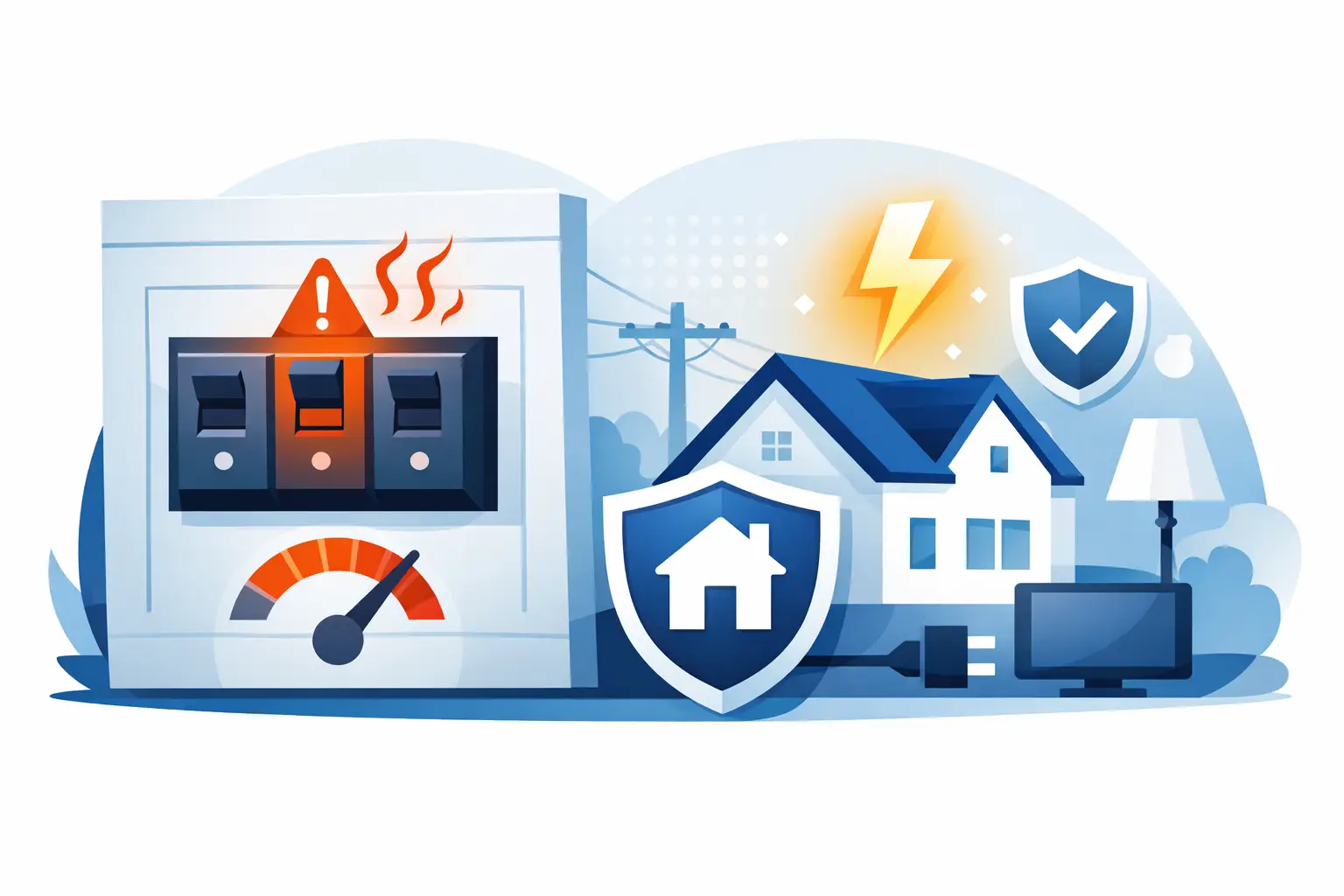
A breaker that trips while dinner is cooking, laundry is running, and someone plugs in a space heater is not simply an inconvenience. It is your electrical system responding to more demand than that circuit can safely handle. Effective breaker overload prevention protects your wiring, reduces the risk of overheating, and helps your household use modern electrical devices with more confidence.
Circuit breakers are designed to shut off power before overloaded wiring becomes dangerously hot. The goal is not to keep a breaker from ever tripping by forcing it back on. The goal is to understand why it tripped, reduce the demand on that circuit, and correct underlying electrical problems when they exist.
Why a Circuit Breaker Trips
Every circuit in your home has a limit. A 15-amp circuit and a 20-amp circuit can only carry so much electrical current at one time. When appliances, electronics, lights, and chargers draw more power than the circuit can safely deliver, the breaker trips and cuts power.
This often happens in predictable places. Kitchen counter outlets may power a toaster oven, coffee maker, air fryer, and microwave within the same area. A bedroom circuit may be asked to run a portable heater, television, gaming equipment, lamps, and charging stations. In older Baltimore-area homes, the number of available circuits may not reflect how families use electricity now.
A tripped breaker can also point to something other than overload. A short circuit, damaged appliance cord, loose connection, failing outlet, or problem within the panel can cause a breaker to trip. That distinction matters. Repeatedly resetting a breaker without identifying the cause can allow a serious issue to continue.
Breaker Overload Prevention Starts With Circuit Awareness
You do not need to be an electrician to begin using circuits more thoughtfully. Start by noticing which outlets and rooms lose power when a breaker trips. Your panel directory may identify the circuit, although labels in older panels are sometimes incomplete or inaccurate.
Pay close attention to high-wattage appliances. Portable space heaters, hair dryers, curling irons, microwaves, toaster ovens, air fryers, vacuum cleaners, window air conditioners, and dehumidifiers can use a significant share of a circuit’s capacity on their own. Plugging two or more of these items into the same circuit is a common reason for tripping.
Avoid treating power strips as a way to create more electrical capacity. A quality surge-protecting power strip can be useful for low-demand electronics, but it does not increase what the wall outlet or circuit can handle. High-draw appliances should be plugged directly into a properly functioning wall outlet, not an extension cord or overloaded strip.
For equipment that runs for long periods, electricians generally plan for continuous loads with extra capacity rather than loading a circuit to its absolute limit. That is especially relevant for EV charging, portable heaters, lighting, and equipment that may operate for hours. A licensed electrician can calculate the right circuit size and wiring requirements for your specific installation.
Everyday Habits That Reduce Overloads
Small changes can prevent many nuisance trips without making your home less convenient. Run one high-demand countertop appliance at a time when possible. If a bathroom outlet circuit trips when a hair dryer is used, unplug other devices on that circuit before resetting it. Use a space heater only on a suitable dedicated outlet and avoid sharing that circuit with other major loads.
It also helps to inspect the cords and plugs you use every day. Replace cords that are frayed, cracked, loose, or hot to the touch. Do not run cords under rugs, pinch them behind furniture, or rely on extension cords as permanent wiring. These conditions can create heat and damage that a breaker may not immediately reveal.
Be careful with older outlets. A plug that falls out easily, an outlet cover that feels warm, buzzing sounds, discoloration, or a burning odor all deserve prompt attention. Those are not normal signs of a heavily used outlet, and they should not be ignored just because the breaker has not tripped.
When Your Home Needs More Than Better Plug-In Habits
Breaker overload prevention sometimes requires an electrical upgrade, not a change in behavior. If the same circuit trips despite normal use, your home may need additional dedicated circuits, replacement outlets, updated wiring, or a panel evaluation.
This is especially common during renovations and electrification projects. Adding an EV charger, hot tub, electric range, sump pump, central air equipment, finished basement, workshop tools, or new kitchen appliances changes the load your electrical system must support. Even a home that has worked well for years may not have enough capacity for these additions.
A dedicated circuit gives a major appliance its own protected electrical path. For example, an EV charger should be installed on a properly sized dedicated circuit, not connected through an extension cord or added to an already busy garage circuit. The same principle applies to many fixed appliances and specialty equipment.
Your panel may also need attention if it is outdated, crowded, corroded, making unusual sounds, or lacking room for needed circuits. A panel upgrade is not automatically the answer every time a breaker trips. Sometimes a new circuit or repair is enough. A professional inspection helps identify the most practical fix rather than paying for work that does not address the real problem.
What to Do When a Breaker Trips
First, turn off or unplug the devices that were running when the power went out. Locate the electrical panel and look for a breaker that is in the middle position or appears off. Move it fully to the off position, then reset it to on.
If the breaker holds after you have reduced the load, add devices back gradually. This can help you identify whether a particular appliance or combination of appliances is overloading the circuit. If one device immediately causes the breaker to trip, stop using it until it can be inspected or replaced.
Do not repeatedly reset a breaker that trips right away, trips with nothing plugged in, feels warm, has visible damage, or is accompanied by a burning smell, sparking, or buzzing. Leave the breaker off and arrange professional service. If you see smoke or signs of fire, move to safety and call emergency services.
Never replace a breaker with a larger one simply to stop tripping. The breaker size must match the wiring and circuit design. Installing an oversized breaker can allow wires to overheat before the breaker shuts off power.
Signs It Is Time to Call an Electrician
A single trip after running several high-demand appliances can often be resolved by redistributing the load. But recurring trips deserve a closer look. Call a qualified electrician if breakers trip frequently, lights dim when appliances start, outlets are warm or discolored, you rely heavily on extension cords, or your panel labels are unclear.
Professional troubleshooting is also worthwhile before buying a major appliance or beginning a project that will add electrical demand. An electrician can assess your panel capacity, identify overloaded circuits, verify grounding and connections, and recommend dedicated circuits where they make sense. This is particularly valuable in older homes, where past renovations may have left behind confusing circuit layouts or aging components.
For homeowners throughout the Baltimore area and the broader Mid-Atlantic corridor, Stella Electric can diagnose recurring breaker trips and provide clear options for repairs, dedicated circuits, and panel upgrades. The right solution should improve safety and fit how your household actually uses power.
A breaker that trips is giving you useful information. Treat it as a reason to pause, reduce the load, and get help when the pattern does not make sense. A safer electrical system begins with paying attention before a minor interruption becomes a bigger repair.